



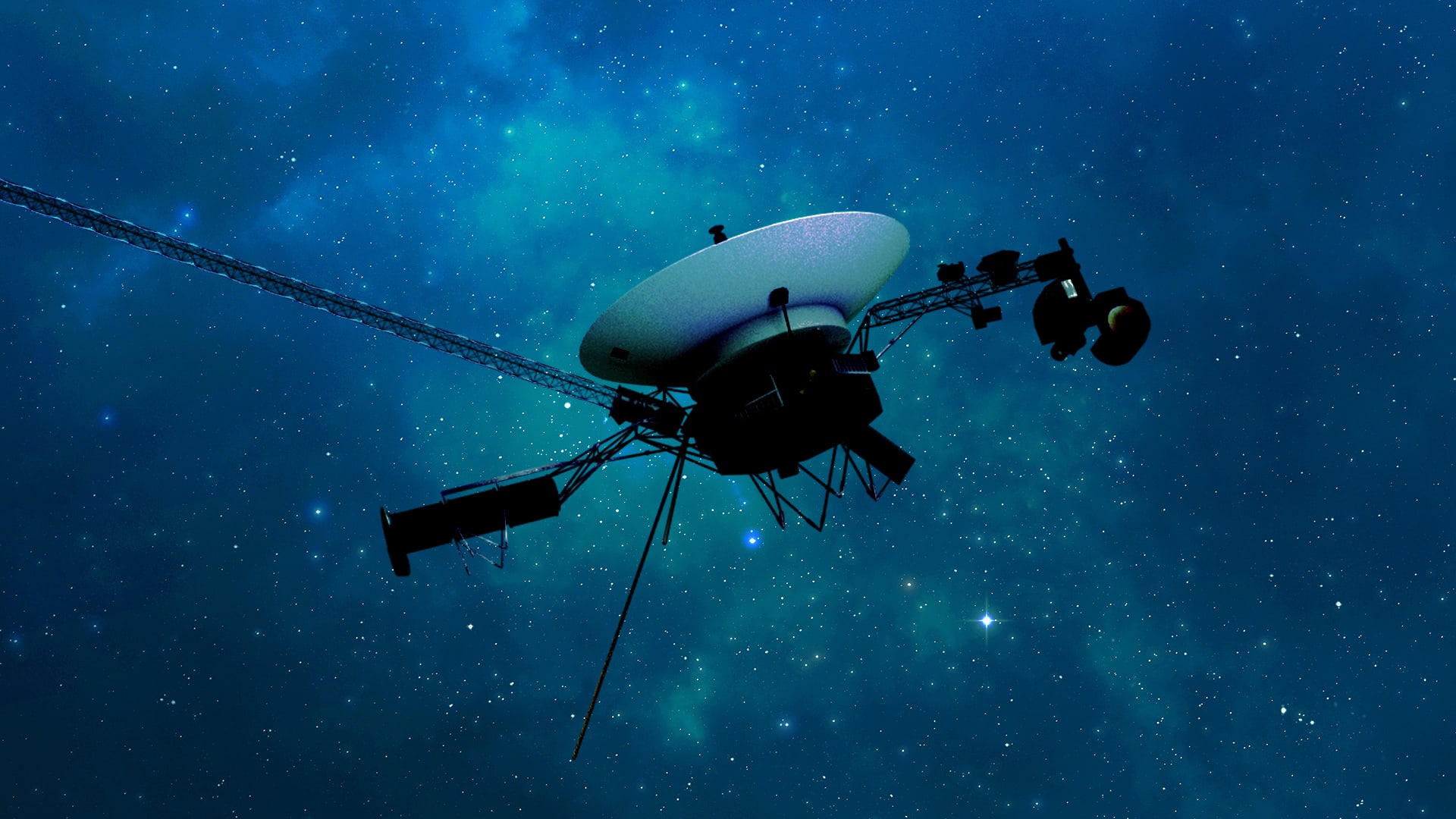
VOYAGER 1 REACHES ONE LIGHT-DAY FROM EARTH
At 5:16:07 a.m. EST on Nov. 18, Voyager 1 hits about 16.09 billion miles from Earth, one full light-day. Send it a command that morning and it lands tomorrow. Wait for the answer and you are two days deep. That is the best long distance humanity has ever managed, after 49 years, two months and 11 days of coasting at roughly 38,000 mph. NASA is throwing a party for it. The night before, Nov. 17, the agency wants people to point a flashlight, phone, glow stick or whatever else at the sky and flash V-G-R in Morse code, and there is an automated flasher online for anyone who cannot be trusted with dots and dashes. Voyager sees none of this. It has two working instruments left, the plasma wave subsystem and the magnetometer, and in April NASA will switch off another one to save power. Then on Nov. 19 at noon Eastern, JPL puts mission staff on camera to talk about Voyager's status and the problem of running a 1977 spacecraft at that range, plus a preview of a Voyager documentary due in 2027 for the 50th anniversary. The old thing is still filing reports. Deputy project scientist Jamie Rankin says every day it is "in places nobody's ever explored before."
Why you should give a shit: Your phone can't reach a spacecraft and the spacecraft can't see your phone, but it's still mailing back data from territory no instrument has ever touched, and NASA figures the Deep Space Network loses it around 2036, so this is one of the last big numbers it gets to hand us.